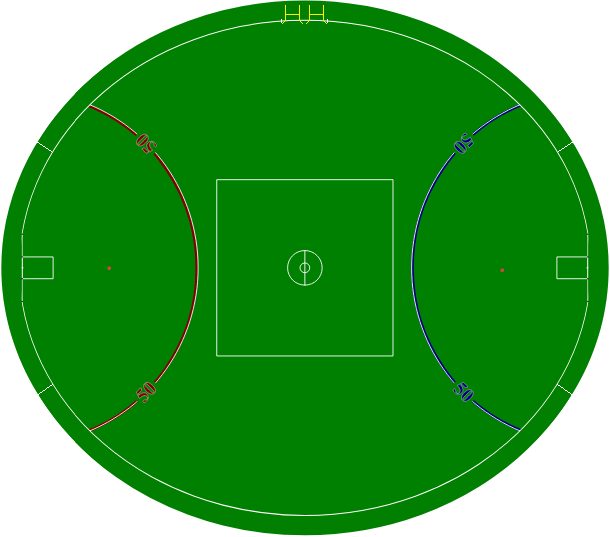
Just like physical fitness, our mental fitness sits on a continuum and can change from day to day.
Think of it like a game of football. When you have the ball, are moving forward and feel in control, you are moving towards Thriving. When possession changes and the play moves towards your defensive end, pressure can build and your goals—or the things that matter to you—can feel under attack.
Move the ball to the position that best matches how you are feeling today. This is your starting point, not a label.
Recognise your position. Read the play. Choose your next action.
You can move the ball again or ask for support at any time.
You’re in controlThere’s no perfect score and no pressure to move up the field. A small choice can be enough.
Keep Your Next Play close
Add this check-in to your phone’s Home Screen so it’s easy to find each day.
iPhone or iPadOpen this page in Safari, tap Share, then Add to Home Screen. Turn on Open as Web App if offered.
AndroidOpen this page in Chrome, tap ⋮, then Install app or Add to Home screen.
Once the app has loaded, the check-in and saved history can work offline. Support and appointment links need a connection.
Step 1 of 4 · Choose your position
How are you feeling?
There’s no right answer. Choose the position that feels closest today.
Personalise your field colours
Make the oval feel like yours
Simplified colour and pattern themes for this private prototype; no club logos or official artwork.
MF
StrugglingDefensive endThrivingForward end
In the Contest
Choose Crisis at the far left, then tap See urgent support. Under Pressure is a separate regrouping state.
In the Contest
Centre square
TRY A TOOL
Starting point: In the Contest · Your need: Feel steadier
A next play you can choose
ACT · NOTICE
These are options, not requirements or a personal exercise prescription. Start at a level that suits you, adapt for injury, illness, disability, pain, pregnancy, age or other health needs, and stop if movement feels unsafe or uncomfortable. Rest and support are valid next plays too.
Connect this next play to something that matters
✓
Your check-in is saved
Take this next play at your pace. It can be small, and you can change it if you need to.
Today’s next playA small step you chose
Support options
Choose the support that fits
This check-in is not a crisis assessment. If someone is in immediate danger, use urgent support now.
Need urgent support now?
If you may act on thoughts of harming yourself or someone else, or you are in immediate danger, call 000. If you can, move near a trusted person and tell them plainly that you need help.
Your check-ins will appear here after you save one.
A simple ACT reset
Notice · Open · Choose
1
NoticeName what’s happening in your body, thoughts and feelings.
2
Make roomSee if you can let the experience be here for this moment, without needing to fix it first.
3
Choose your next playTake one small step toward something you care about—or choose rest or support.
Why these movement ideas? Sources and notes
The “Hit the track” ideas translate Zone Psychology’s Exercise as Treatment guidance into small, optional next plays. The frequency and duration ranges are broad clinic guideposts, not requirements or an individual exercise prescription. Start with the lowest manageable dose and build gradually; consistency matters more than intensity. Adjust to age, ability, injury, illness, disability, pain, pregnancy and individual health needs. Exercise can support mental health, but complements rather than replaces professional care where indicated.
Psychological prompts are inspired by Acceptance and Commitment Therapy (ACT). They are self-guided wellbeing prompts, not therapy or a substitute for professional care.